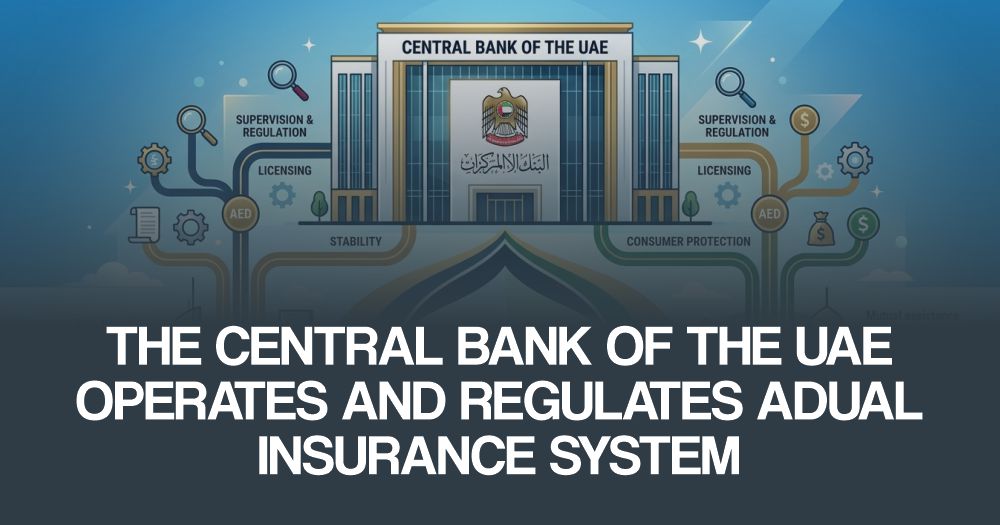
Following the merger of the Insurance Authority into the Central Bank of the UAE (CBUAE) initiated in 2021, the CBUAE now serves as the primary regulator for the nation’s insurance sector. This integration was finalized as a success in 2023, aiming to transform the CBUAE into one of the top 10 central banks globally.
Regulatory Mandate and Objectives
The CBUAE holds a broad mandate that includes the licensing, supervision, and enforcement of regulations within the insurance industry. Its primary goals include:
- Consumer Protection: Ensuring the interests of policyholders are protected through high standards of market conduct.
- Financial Stability: Maintaining a stable insurance market to support the national economy.
- Fair Competition: Promoting a competitive environment that offers quality services at affordable rates.
- Emiratization: Advancing the inclusion of UAE nationals within the insurance workforce.
The Dual Insurance System
The CBUAE operates and regulates a dual insurance system, where two distinct models function in tandem:
- Conventional Insurance: Standard commercial insurance models.
- Takaful Insurance: Islamic insurance based on Shari’a-compliant principles.
All insurance companies are required to follow international benchmarks, specifically the Insurance Core Principles from the IAIS and IFSB standards for Takaful operations.
Key Regulatory Focus Areas
The CBUAE’s guidelines focus on three primary pillars to ensure industry integrity:
| Pillar | Description |
| Solvency | Strict requirements regarding minimum capital, solvency margins, and funding to protect consumers and industries. |
| Re-Takaful | Regulations governing reinsurance, where risk and liability are ceded from a direct insurer to a reinsurer. |
| Family & Non-Family | Oversight of both life (Family) and non-life insurance/Takaful contracts, including property and liability insurance. |